A 12-year-old spayed female Golden Retriever dog was presented for anorexia and weight loss. Pyrexia, weak hindquarters, and multiple growths were noted on physical examination. CBC and T4 were within normal limits. Abnormalities on serum biochemistry included azotemia, elevated liver enzymes, and hypercholesterolemia.
A 12-year-old spayed female Golden Retriever dog was presented for anorexia and weight loss. Pyrexia, weak hindquarters, and multiple growths were noted on physical examination. CBC and T4 were within normal limits. Abnormalities on serum biochemistry included azotemia, elevated liver enzymes, and hypercholesterolemia.
Increased liver values – neoplasia, infection (bacterial/viral), toxic, chronic-active hepatitis, abscessation, vacuolar hepatopathy, granulomatous hepatitis. Azotemia – chronic kidney disease, neoplasia, pyelonephritis, renoliths.
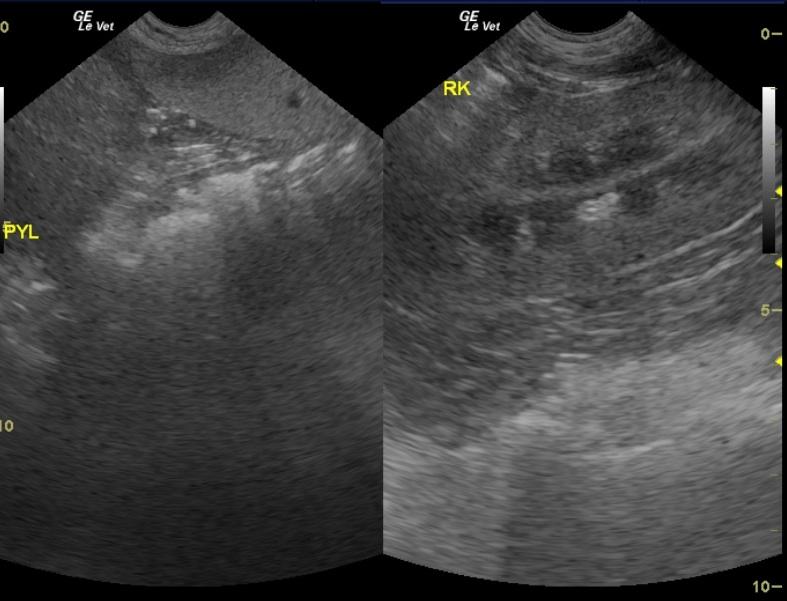
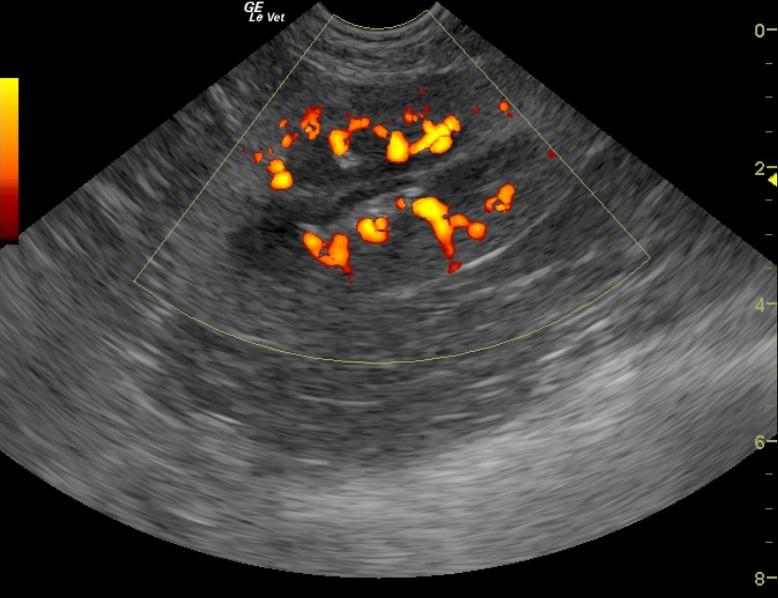
The urine presented some mildly echogenic debris consistent with mucous, exfoliated cells from renal or bladder origin, and/or blood clots. This is often related to urinary tract infection (UTI) but may also represent simple evidence of exfoliated debris or sterile inflammation. Cystocentesis, urinalysis, and/or culture would be recommended to rule out and define a UTI. The kidneys presented mildly dilated renal pelvises with moderate chronic degenerative cortical changes. The kidneys were mildly subnormal in size with retraction of the capsular contour. This sonographic presentation is most consistent with chronic interstitial nephritis with potential concurrent pyelonephritis.