A neutered male bull dog of unknown age was presented for evaluation of chronic urinary tract infections. Urinalysis showed normal SG (1.038), proteinuria, and trace hematuria. Urine culture done 2 months prior was negative for bacterial growth. Current therapy is Baytril.
A neutered male bull dog of unknown age was presented for evaluation of chronic urinary tract infections. Urinalysis showed normal SG (1.038), proteinuria, and trace hematuria. Urine culture done 2 months prior was negative for bacterial growth. Current therapy is Baytril.
Chronic urinary tract symptoms – bladder pathology (uroliths, polyploid cystitis, chronic bacterial cystitis, neoplasia), renal pathology (pyelonephritis, renoliths, dysplasia), prostatic neoplasia.
Urine culture was repeated and was positive for Enterococcus.
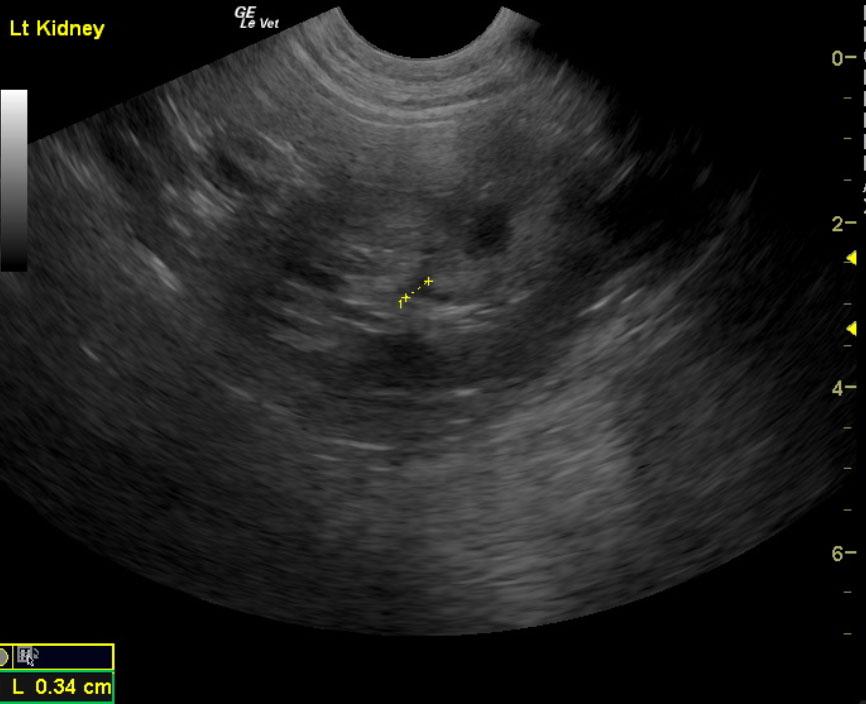
Pyelectasia could be due to scarring or persistent low grade infection or from passage of small calculi. Calculus may be secondary to chronic infection. Long-term antibiotic therapy should be considered in this patient even if the cultures are negative in hopes that the pyelectasia will completely resolve. Because a certain level of renal dysplasia could be present in this patient, BUN and creatinine evaluation should be considered as part of the work up. The persistence of white blood cells in the urine would suggest ongoing probable low grade infection. Recheck sonogram should be performed after the 4 additional weeks of antibiotic treatment.
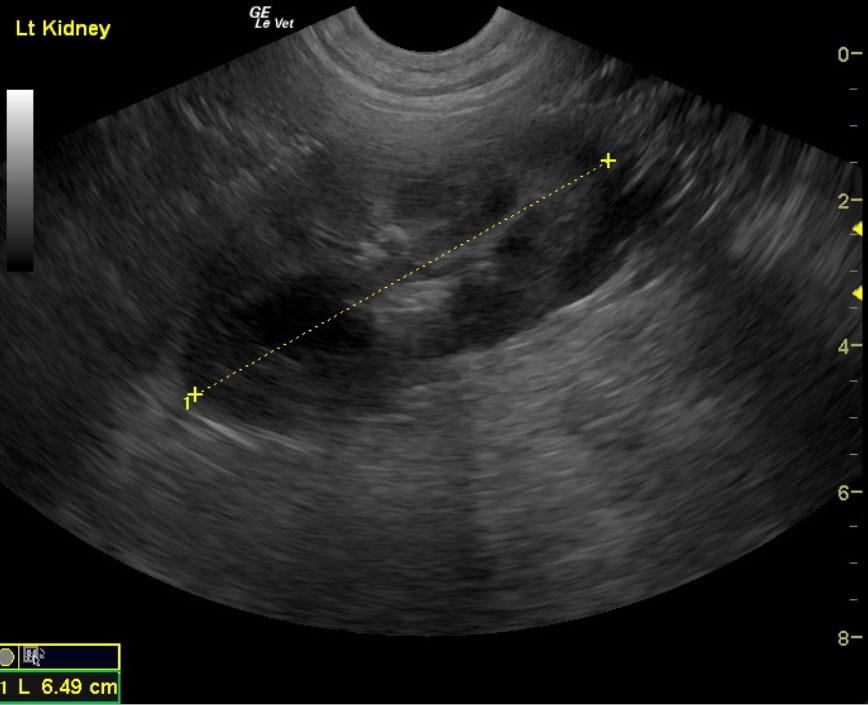
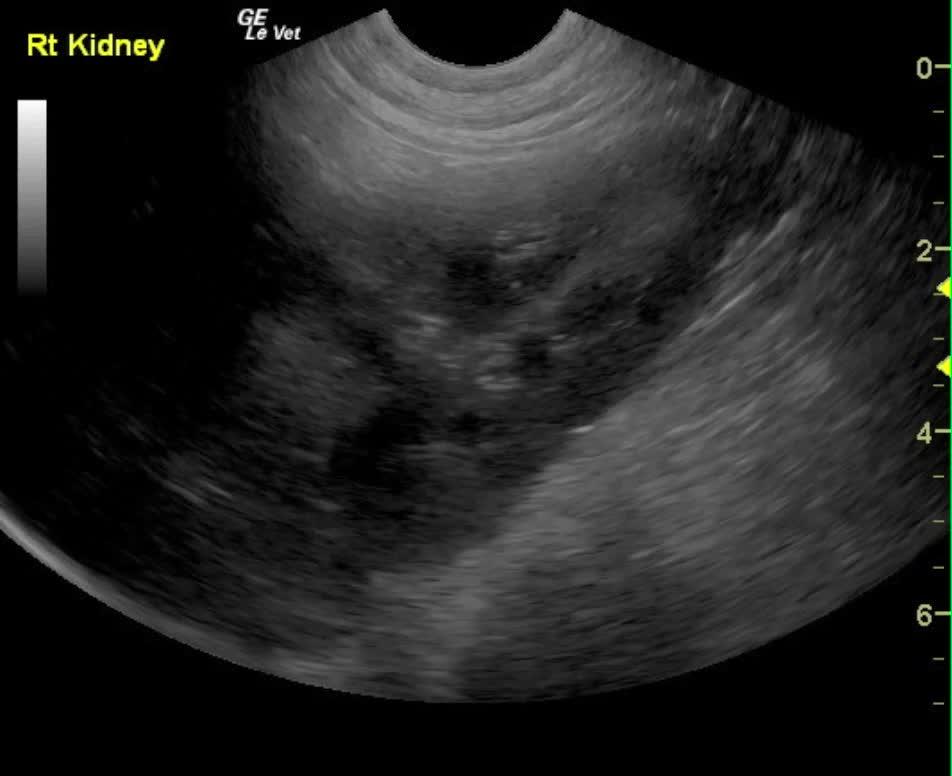
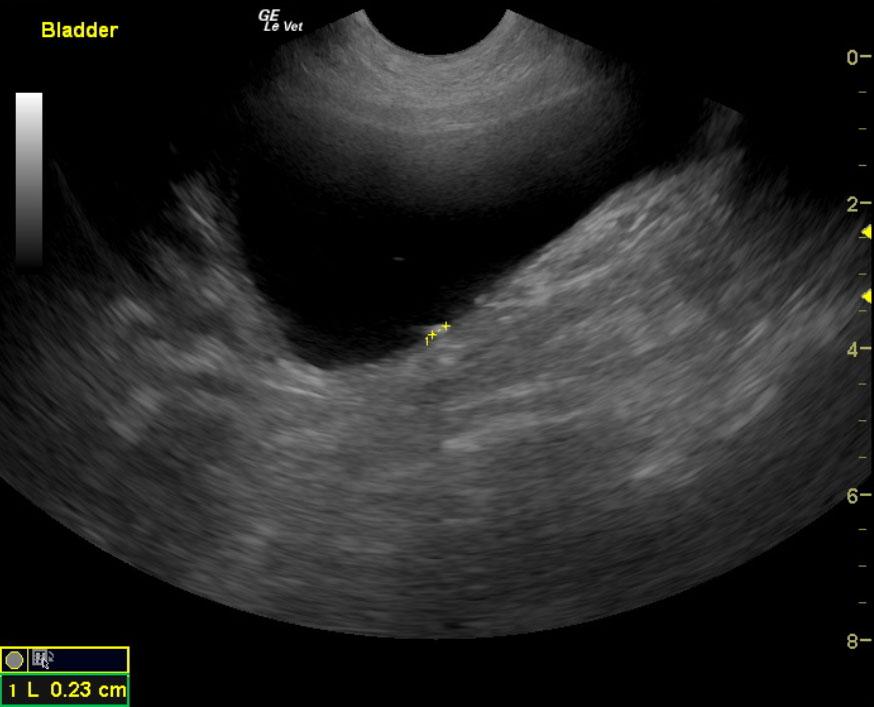
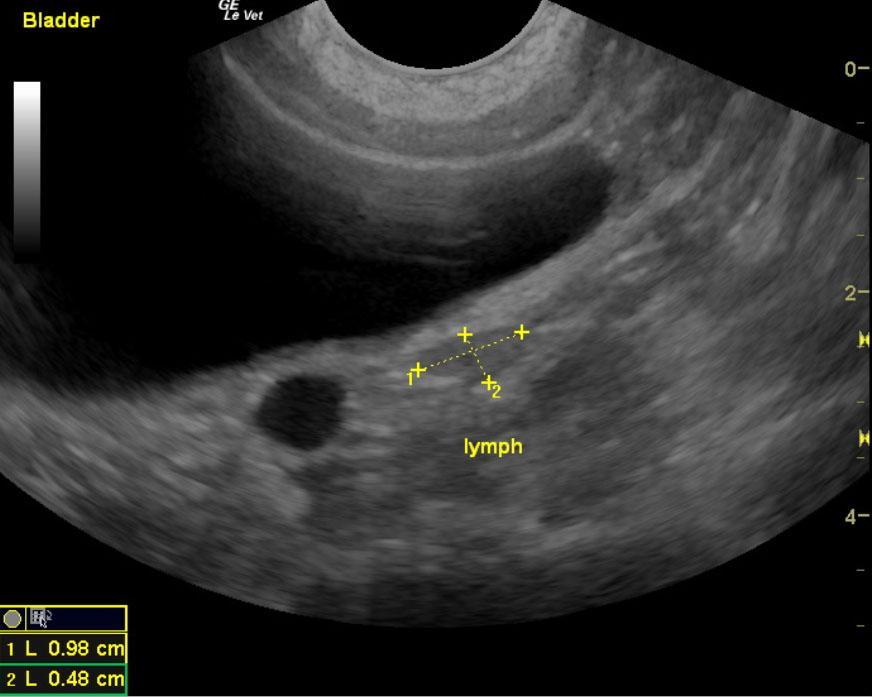
The kidneys in this patient had a persistent, slightly irregular contour, with the left kidney demonstrating slight pyelectasia (0.26 cm). The urinary bladder, trigone and pelvic urethra presented normal wall thicknesses with anechoic urine and normal tone. The urinary bladder revealed slight calculus at 0.23cm, yet was not shadowing. No evidence of inflammatory or neoplastic changes were noted.