This 8 year old FS German Wirehaired Pointer presented for surgical evaluation of a soft tissue mass on the the trunk (enlarged iguinal lymph node). Cytology showed reactive lymphoid population with metastatic round cell neoplasm, likely poorly differentiated mast cell tumor.
This 8 year old FS German Wirehaired Pointer presented for surgical evaluation of a soft tissue mass on the the trunk (enlarged iguinal lymph node). Cytology showed reactive lymphoid population with metastatic round cell neoplasm, likely poorly differentiated mast cell tumor.
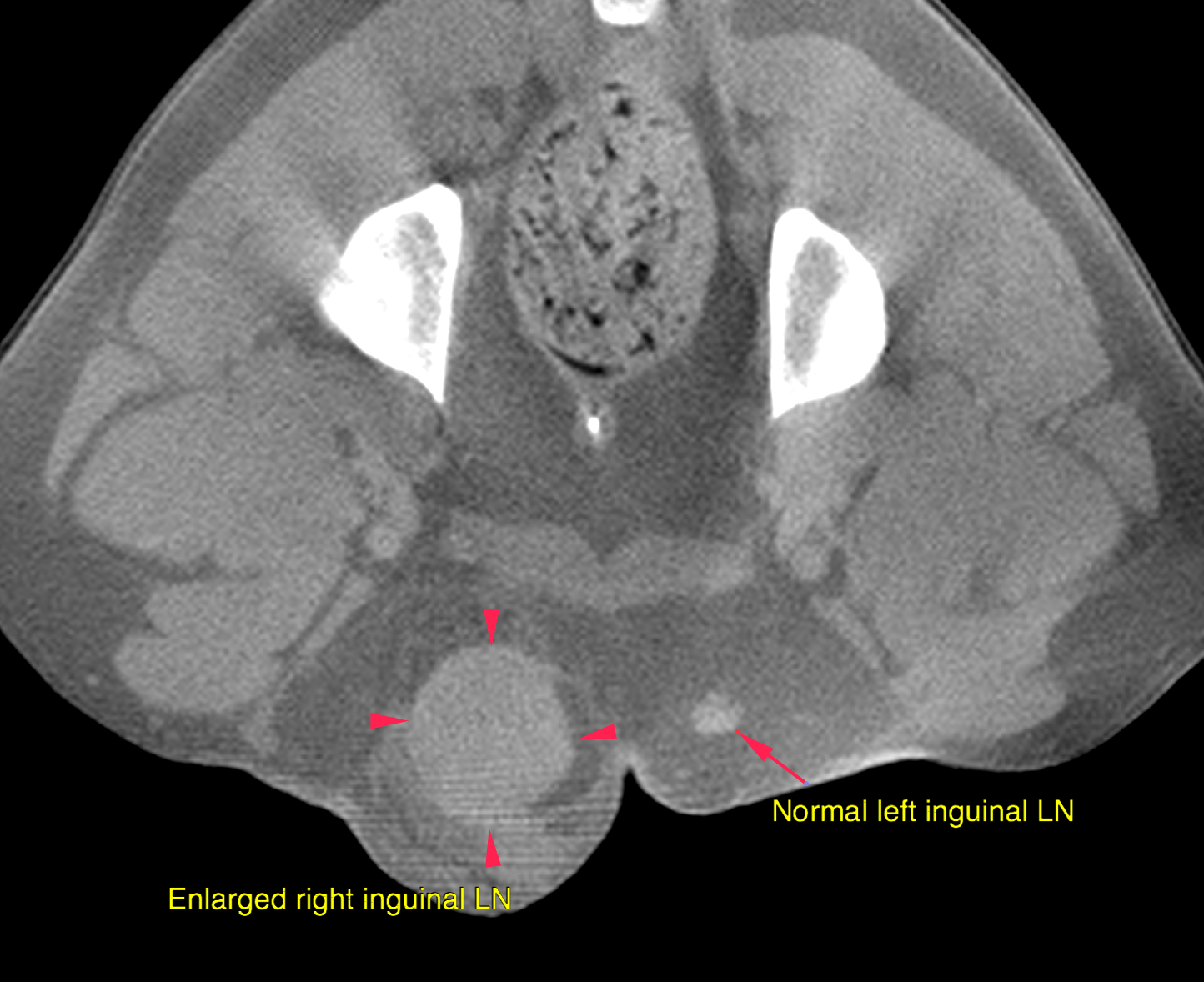
Neoplasia of the right inguinal lymph node meeting malignancy criteria with regional cellulitis
CT of the thorax and abdomen –
Thorax: no metastati spread
Abdomen:
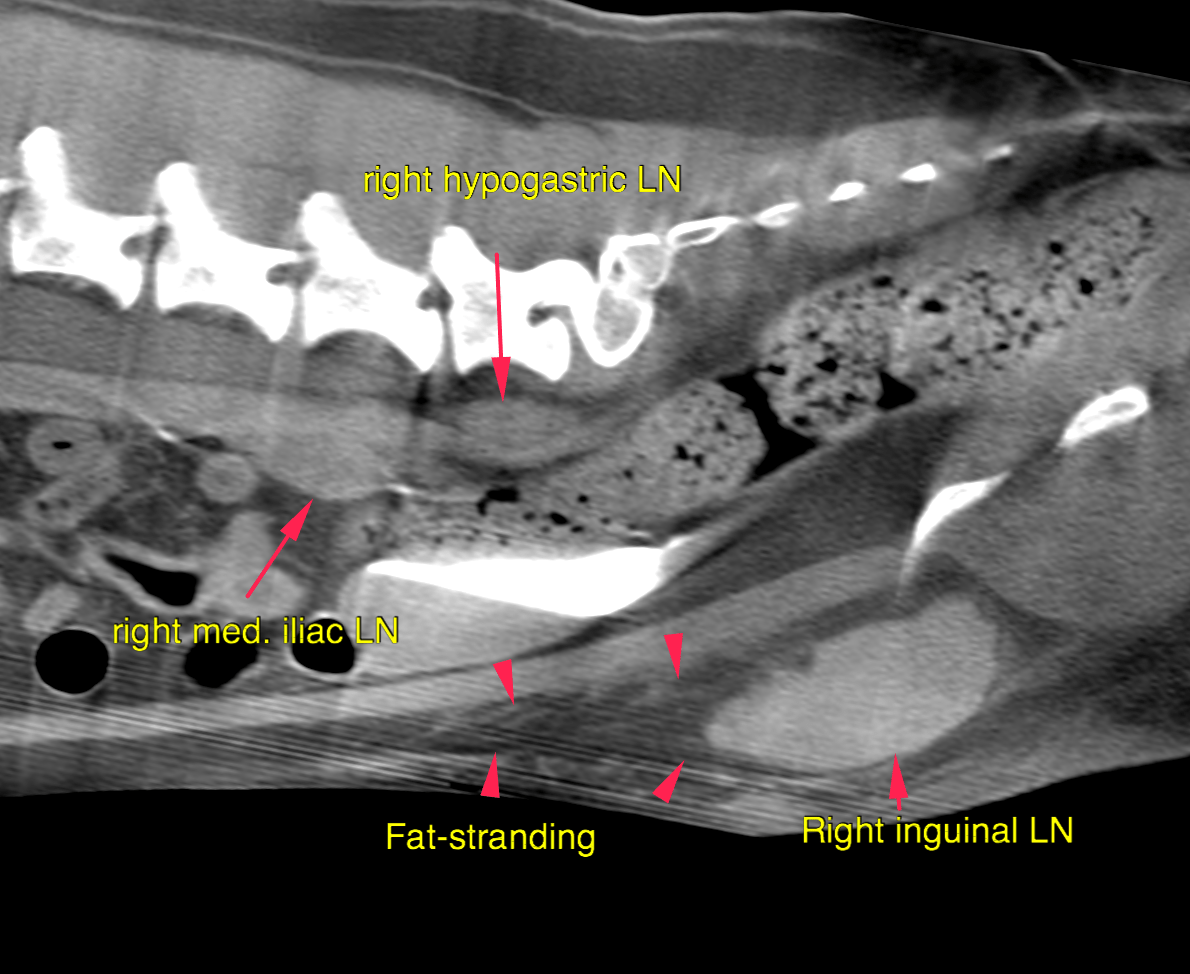
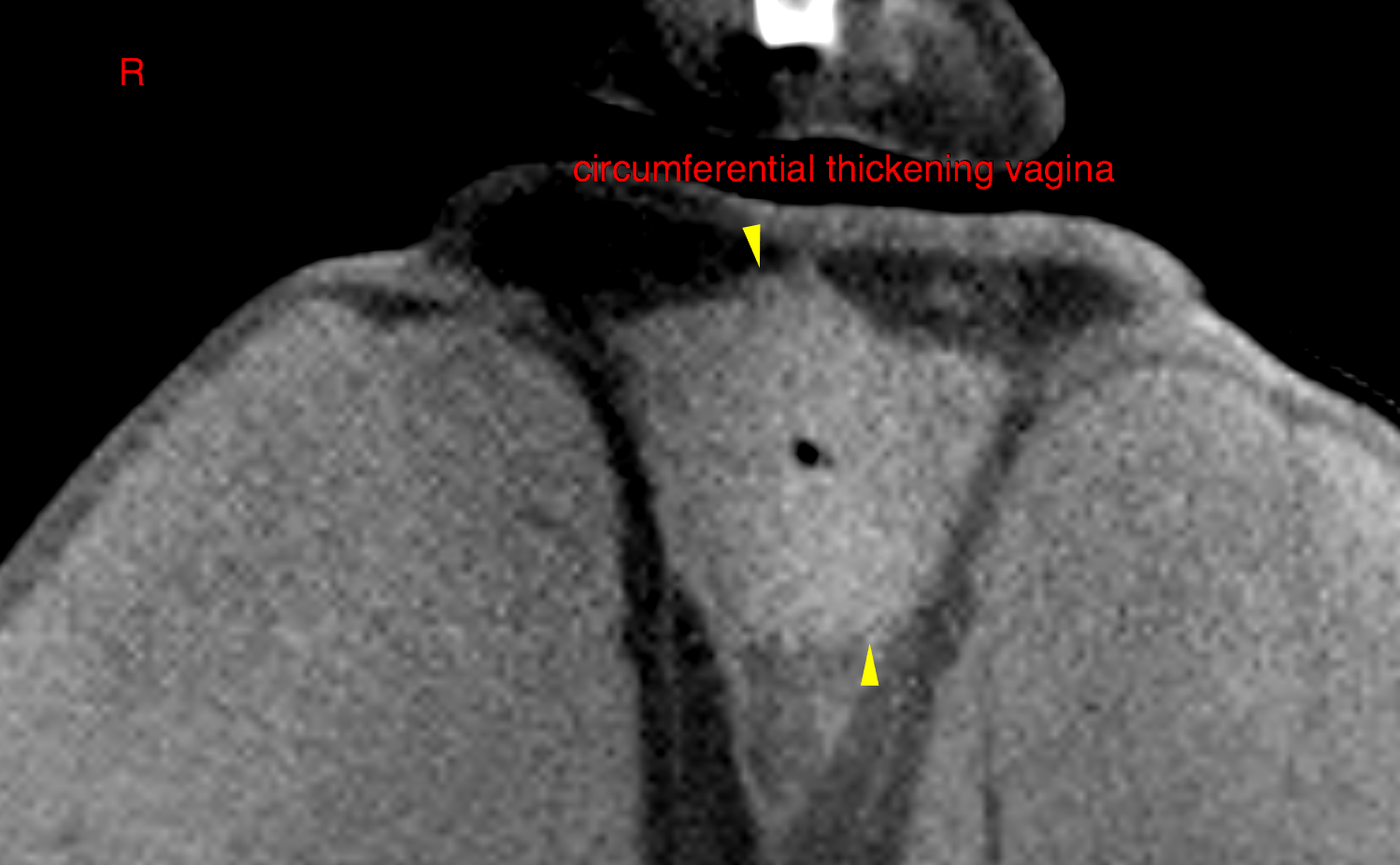
The right inguinal lymph node is severely enlarged at 3 x 2.2 x 6.1 cm with moderate peripheral fat-stranding, increased short-to-long-axis-ratio > 0.5 and irregular contrast enhancement. The right sided tributary lymph nodes (hypogastric, medial iliac and sacral) are markedly enlarged and rounded, short-to-long-axis-ratio > 0.5. The lymph nodes of the hypogastric area on the left side are prominent and rounded as well, short-to-long-axisratio > 0.5. The wall of the vagina/cervix presents moderate focal circumferential and transmural thickening at 1 cm cranial to the vaginal vestibulum. The spleen is enlarged and rounded
In addition, lymphadenopathy of the hypogastric, medial iliac and sacral lymph-nodes
• Splenomegaly
• Possible pathologic thickening of the vaginal wall
The findings are consistent with history of mast-cell tumor and metastatic spread to the
right inguinal lymph nodes and its tributaries including the contralateral side. The marked splenomegaly can be either caused by pooling of blood due to general
anesthesia or from diffuse metastatic spread of the mast-cell tumor in the spleen. For further staging ultrasound guided FNA samples of the spleen, liver and the
tributary lymph-nodes are essential. However there is no surgical therapeutic option
due to the metastatic spread in multiple lymph nodes. Palliative chemotherapeutic
treatment with Masitinib may be considered.