A 4-year-old MN Lhasa Apso with history of allergies being managed with hydroxyzine, Benadryl, and dexamethasone, was presented for a routine visit. The only abnormality on physical examination was an oral mass adjacent to the lower incisors. Pre-anesthetic bloods showed mild azotemia. The patient’s procedure was postponed until azotemia improved.
A 4-year-old MN Lhasa Apso with history of allergies being managed with hydroxyzine, Benadryl, and dexamethasone, was presented for a routine visit. The only abnormality on physical examination was an oral mass adjacent to the lower incisors. Pre-anesthetic bloods showed mild azotemia. The patient’s procedure was postponed until azotemia improved.
Pre-renal azotemia, renal azotemia (early chronic kidney disease, congenital renal disease, infectious nephritis (bacterial/fungal), prior pyelonephritis, renolith).
Primary renal dysplasia is the most likely diagnosis, due to young age of patient. There is a possibility of chronic glomerulonephritis. Concurrent infectious disease may be a complicating factor (eg. leptospirosis).
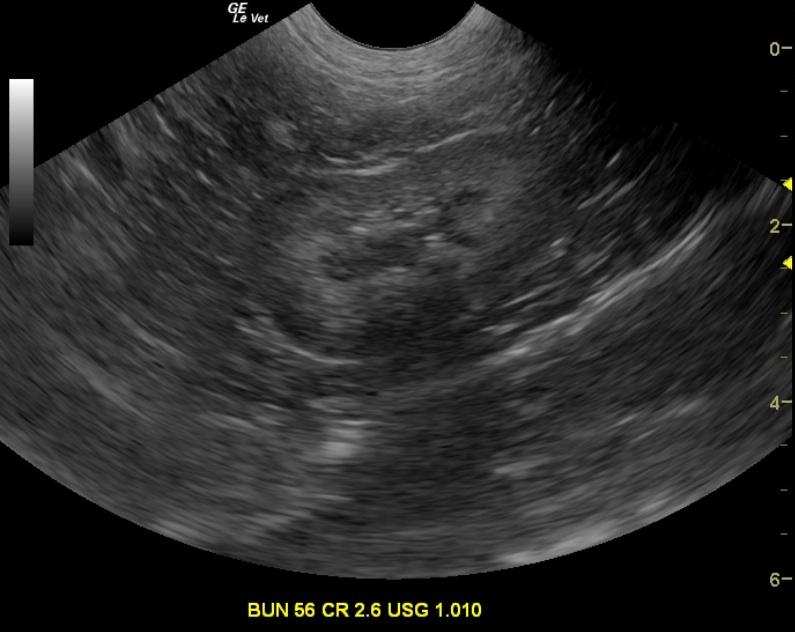
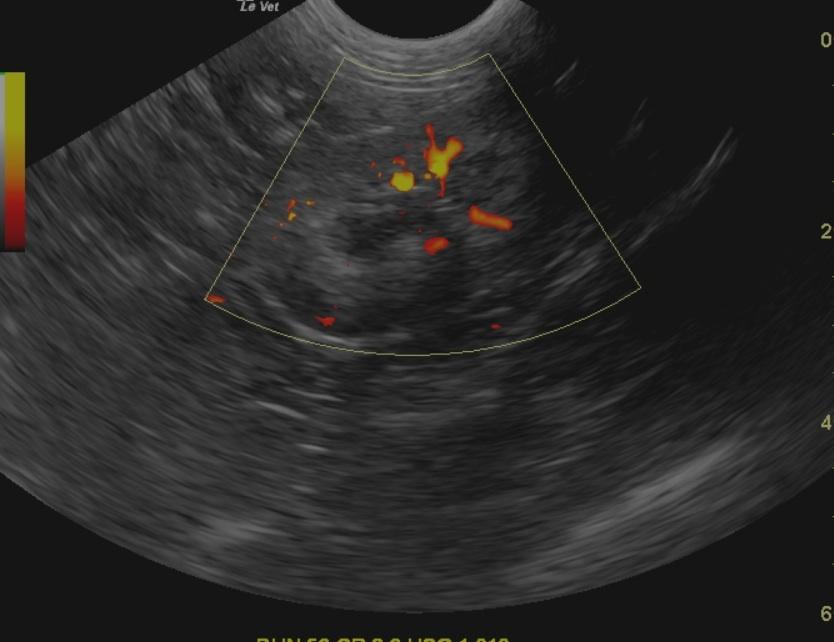
The kidneys were subnormal in size at 4cm each with thickened cortices and hyperechoic medullary rim and ill defined corticomedullary definition. The medulla was significantly compressed. This is most consistent with primary renal dysplasia with the possibility of chronic glomerulonephritis, toxin exposure, or potential amyloid. Infectious disease should be ruled out as a complicating factor.
Ultrasound guided renal biopsy, blood pressure measurements, and Lyme and leptospirosis screening were recommended for this patient. The patient was treated with Winstrol and K/D diet but, on recheck blood work after several days, there had been only minimal improvement in the azotemia. Leptospirosis results were positive for Pomona, Icterohaemorrhagiae, Grippotyphosa, Autumnalis, and Bratislava. Abnormalities on urinalysis were isosthenuria, 1+ proteinuria, and elevated urine microalbumin. The patient was treated with Baytril, amoxicillin, Winstrol, and K/D diet. Repeat blood work was in essence unchanged. The antibiotics were subsequently discontinued and Azodyl started. Recheck blood work and urinalysis were once again unchanged. On follow up several months later, ongoing azotemia was present with negative Lyme, 4DX, and leptospirosis results. Urine microalbumin was still high but had improved. At last communication the patient was doing well and scheduled for follow-up blood work in three months.