A 1-year-old intact male Giant Schnauzer dog with a 1-month history of lethargy and slightly decreased appetite was presented for evaluation of anorexia and uremic breath. The dog had been noted to be PU/PD since 4 months of age. Isosthenuria and mild proteinuria were present on urinalysis. Abnormalities on CBC and serum biochemistry included anemia, azotemia, and hyperphosphatemia.
A 1-year-old intact male Giant Schnauzer dog with a 1-month history of lethargy and slightly decreased appetite was presented for evaluation of anorexia and uremic breath. The dog had been noted to be PU/PD since 4 months of age. Isosthenuria and mild proteinuria were present on urinalysis. Abnormalities on CBC and serum biochemistry included anemia, azotemia, and hyperphosphatemia.
Renal dysplasia, chronic kidney disease from prior renal insult (infectious, trauma, toxins, hypoxia), pyelonephritis, nephroblastoma.
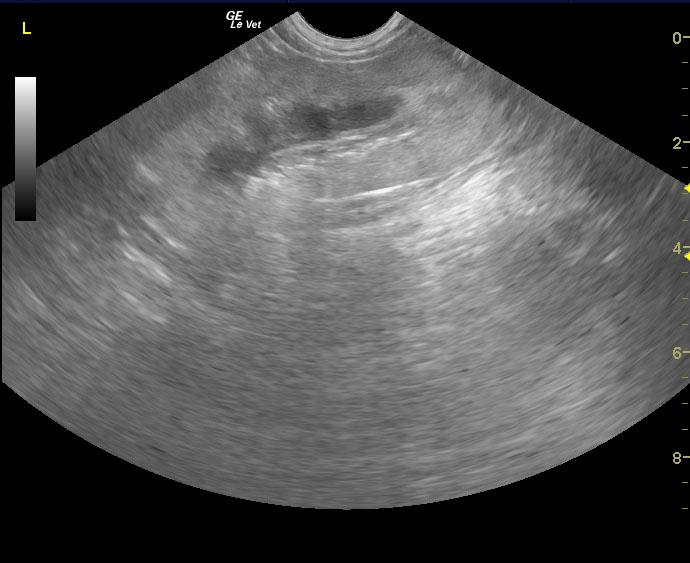
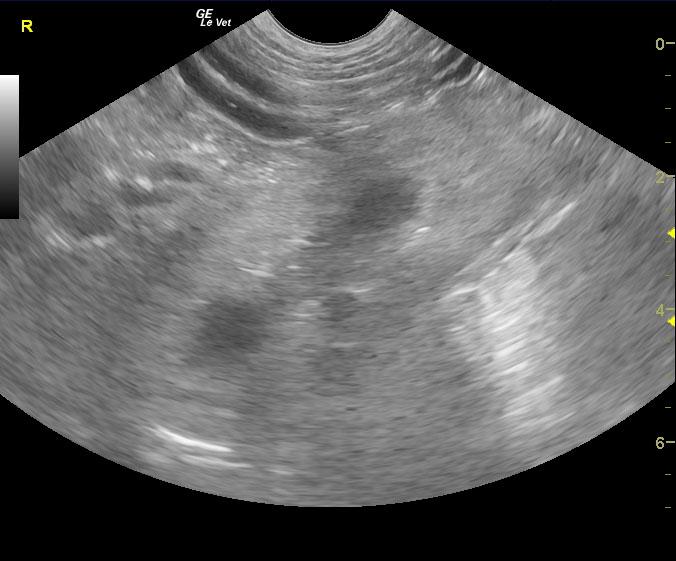
The images show a chronic interstitial nephrosis pattern. Given the patient’s age and history, primary renal dysplasia is possible. Amyloidosis, chronic Leptospirosis or toxin exposure are all possible. ACTH stimulation would be recommended to ensure an underlying Addisonian crisis is not playing a role in this patient and complicating the renal presentation.
The kidneys in this patient presented an interstitial nephrosis pattern, disrupted corticomedullary definition and collapse of the cranial pole of the left cortex. Cortical infarcts were also present. The left kidney size appeared relatively normal to slightly subnormal depending on the weight of the patient. The left kidney measured approximately 6.0 cm. The right kidney revealed similar changes and measured approximately 6.0 cm.