A 10-year-old FS American Eskimo dog was presented for stranguria, hematuria, pollajuria and just not herself. She was non responsive to therapy for UTI. Severe azotemia and moderate anemia developed. Urinalysis revealed proteinuria, elevated WBC, blood and transitional cells, and isosthenuria.
A 10-year-old FS American Eskimo dog was presented for stranguria, hematuria, pollajuria and just not herself. She was non responsive to therapy for UTI. Severe azotemia and moderate anemia developed. Urinalysis revealed proteinuria, elevated WBC, blood and transitional cells, and isosthenuria.
ARF, CRF, bladder neoplasia, obstructive urolithiasis, resistent UTI, infectious.
Non resectable trigonal bladder transitional cell carcinoma with ureteral obstruction
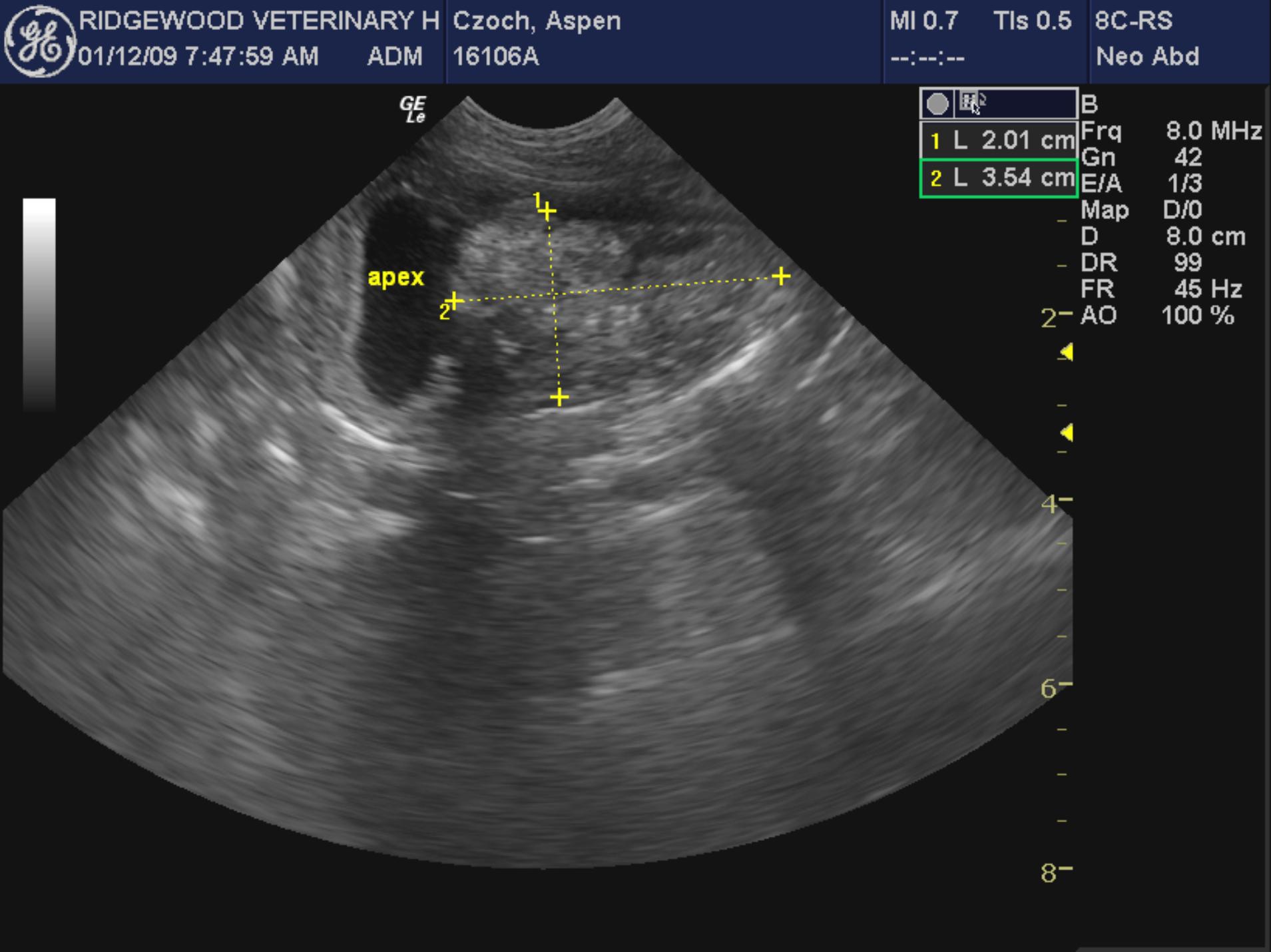
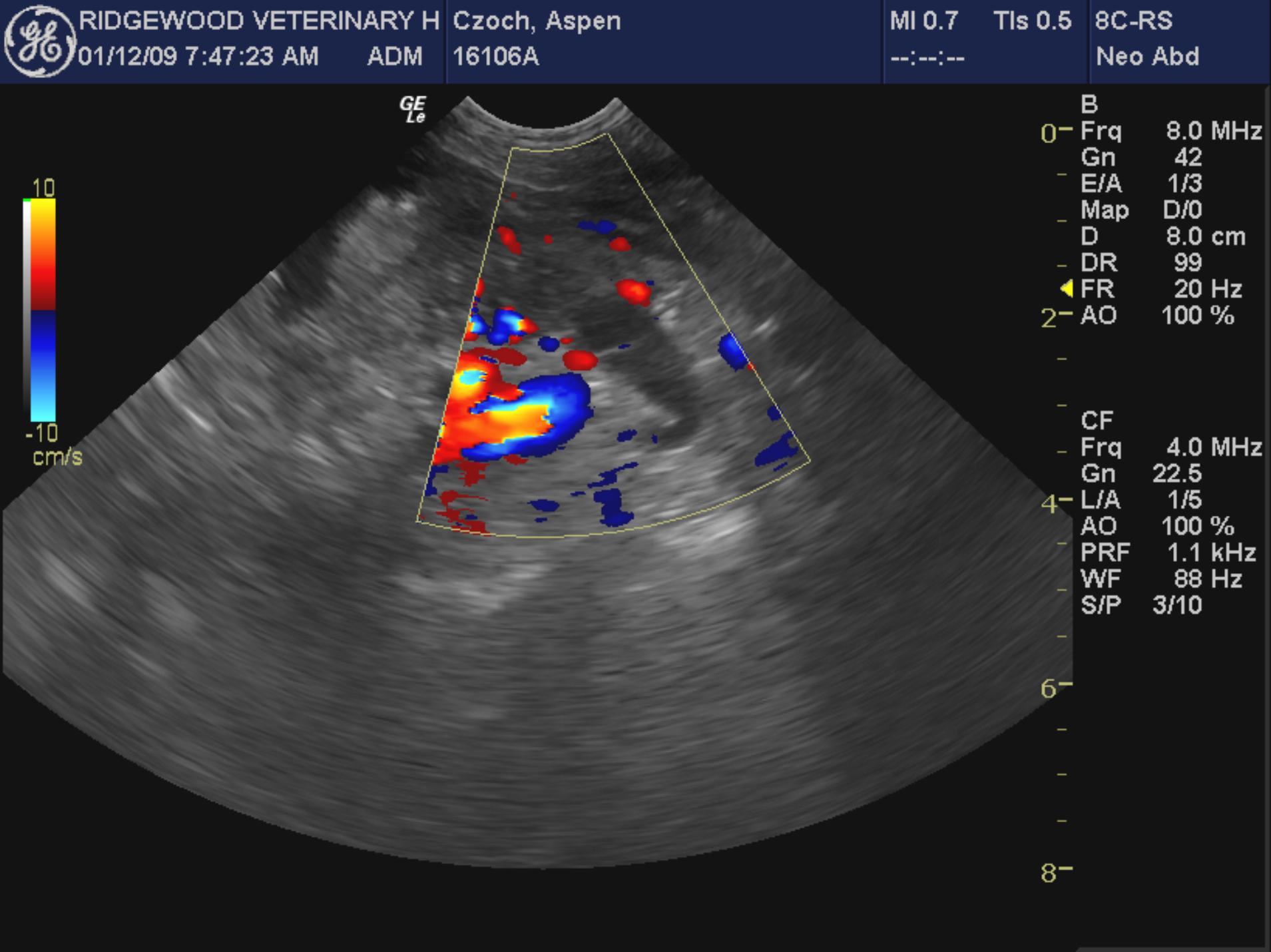
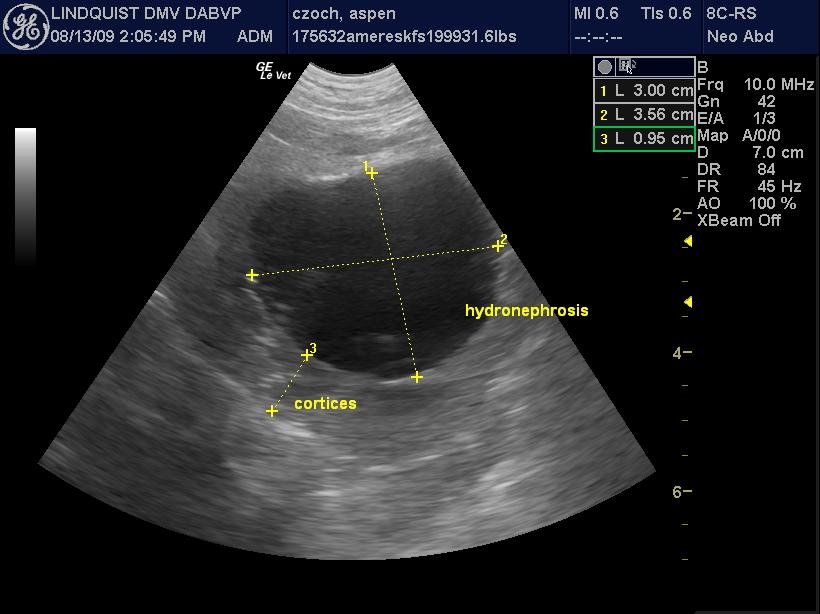
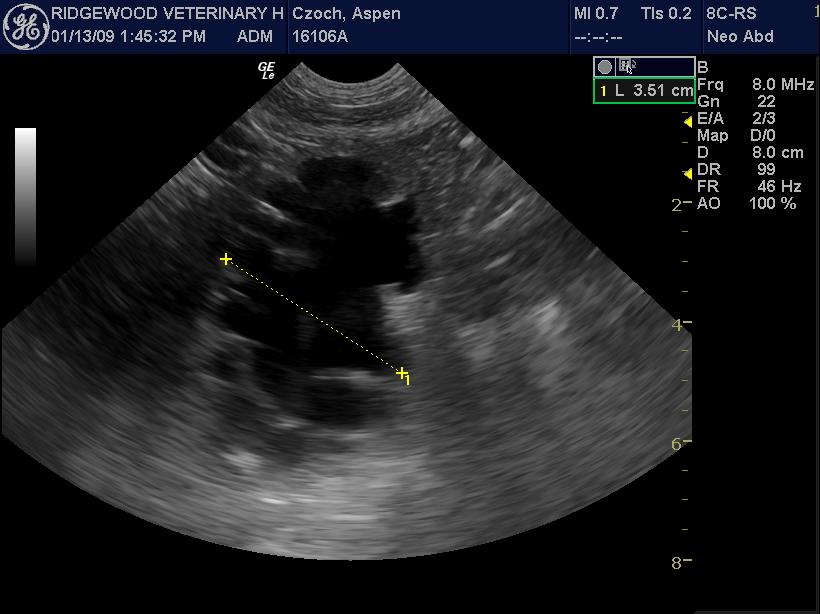
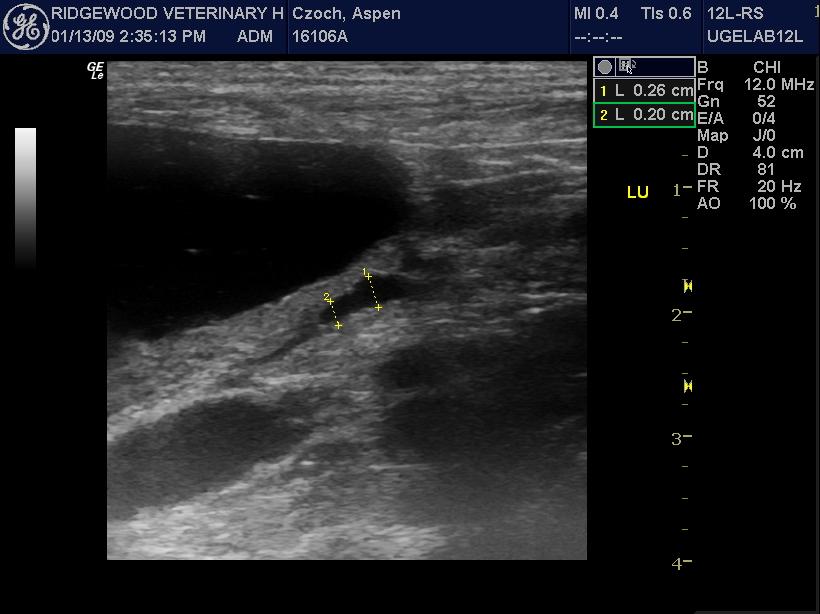
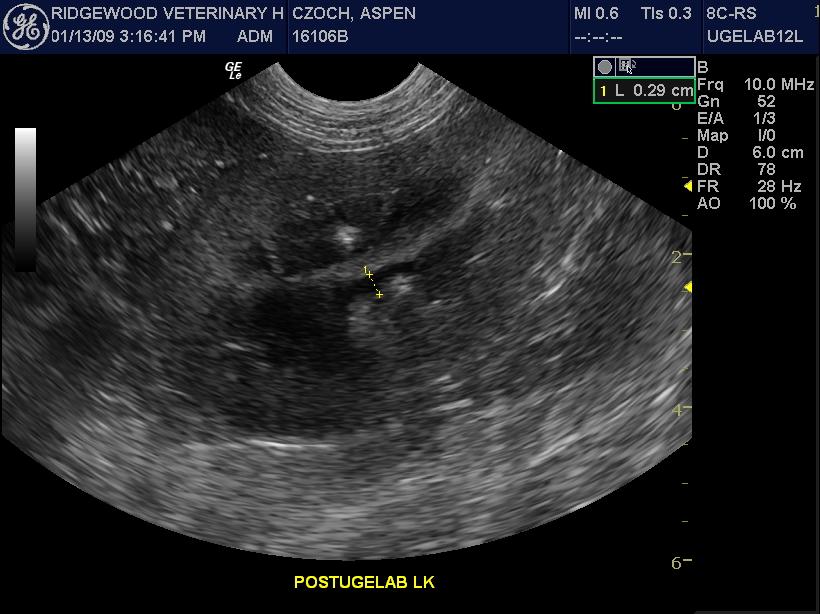
A 3.5 centimeter mineralizing bladder mass is occupying the trigone and obstructing the ureters at the region of the ureteral papillae. The ureters did not appear invaded by the mass. Mild bladder rotation has occurred owing to mass expansion. Moderate to severe hydronephrosis is present in both kidneys owing to ureteral obstruction. Ultrasound-guided laser ablation was performed for palliative removal of the mass and decompression of the ureters. A minimal amount of ureteral dilation was noted at the end of the procedure with slight residual hydronephrosis on followup. Ureteral function appeared adequate noted by contractility.
After undergoing the initial UGELAB procedure the patient survived 227 days and then was humanely euthanized.
Special thanks to Dr. Dean Cerf and staff at Ridgewood Veterinary Hospital, Ridgewood, New Jersey where the ultrasound-guided laser ablation procedure was founded.
More information on this procedure may be found in JAVMA Jan1 2012, Cerf D, Lindquist E.
(http://avmajournals.avma.org/doi/abs/10.2460/javma.240.1.51?journalCode=javma)
or contact Ridgewood Veterinary Hospital directly at 201-447-6000.
Texas A&M University, Department of Radiology also performs this procedure